I remember the exact moment I realized nothing would ever be the same.
At thirty-four, my vision began deteriorating without warning, without explanation. Just darkness creeping in where clarity used to be. The doctors had no answers. I had no preparation. And as my eyesight faded, everything I had built my identity around began to crumble with it.
This wasn’t the kind of narrative that makes for comfortable dinner conversation.
The truth is, the most transformative moments in your life will likely come disguised as your worst nightmares. When catastrophe strikes, it doesn’t care about your five-year plan. It doesn’t concern itself with the promotion you were eyeing, the family you’ve raised, or the image you’ve cultivated for decades.
It just shows up uninvited, kicks down your door, and burns to the ground everything you’ve always thought you were.
The Identity Collapse: When Everything You Are Suddenly Isn’t
Before my world imploded, I had successfully checked all the boxes society told me defined a successful man:
- Corporate career trajectory with upward momentum
- Beautiful family with the requisite children
- Coaching my son’s soccer team and watching my daughter’s dance recitals
- Marriage that looked Instagram-worthy from the outside
- A future that felt predictable, secure, mapped out
- I wasn’t just playing the game—I was winning it.
- Then my vision began to deteriorate. Rapidly. Inexplicably.
Job opportunities vanished. The marriage I thought was unshakable collapsed under the weight of this new reality. I couldn’t coach anymore. I couldn’t see my daughter dance. The simple joy of eye contact with someone I loved—gone.
But the most devastating loss wasn’t what I could see—it was who I thought I was.
Society hands us a very specific script for disability or devastation: you become a victim. A tragedy. An inspiration if you’re lucky. Your story becomes about what you’ve lost, what you can’t do, and how you’re coping with limitation.
And for a while, I played that role perfectly.
I indulged in a life so dangerous that I didn’t know if I wanted to continue living. Suicide was not a distant idea; it was my constant companion, whispering that this half-life wasn’t worth the fight.
The world teaches us that catastrophe ends the story, and the best we can do is learn to live with limitations, to accept them. We should count our blessings if we can salvage anything from the ashes of our previous lives.
And I believed that lie completely.
I threw myself into unhealthy relationships to prove my worth, only to have my deepest fears confirmed multiple times. Friendships drifted away. I became bitter and cynical. I didn’t eat. I didn’t sleep.
I only yearned for the existence I had lost.
The Freedom Found When You No Longer Have Anything to Lose
Most stories about devastating loss conclude with heroic pain and tragic decline followed by acceptance of defeat.
My story continues beyond that point. And yours can too.
The turning point wasn’t dramatic. It wasn’t a sudden epiphany or miracle cure. It was simply this:
I finally lost patience with seeking approval to become powerful.
When Cortés arrived in the New World, he allegedly burned his ships, forcing his men to fight or die. The historical accuracy of this act remains questionable, but the metaphor struck me at my absolute lowest point:
I either needed to remain stuck mourning my past losses or destroy my previous self to build something new.
I discovered the greatest freedom that nobody reveals to people who lose everything:
The loss of everything grants you the absolute freedom to define yourself through your personal choices without constraints.
I no longer had to meet anyone’s expectations. Success didn’t require adhering to pre-made plans. The social agreements that normally control people’s lives—including their career progression, relationship milestones, and public image—no longer applied to me.
Unprecedented liberation emerged from this understanding.
Most people live their entire lives trapped within expectations they never voluntarily accepted. They embrace definitions of success, happiness, and worth that may not align with their true inner fire.
When disaster hits? Those prison walls collapse.
You find yourself among the destruction of your previous existence while experiencing a freedom both frightening and liberating.
The freedom to determine for yourself what constitutes a meaningful existence.
💡 Real Talk Moment: If this is hitting hard, you’re not alone. Start your reinvention at https://MindsetRewired.com. Coaching is open now.

The Blank Canvas Effect: Redefinition as Your Superpower
The process of rebuilding your identity from the ground up feels overwhelming at first. Your present path becomes meaningless. The future you imagined vanishes.
But your blank canvas offers an opportunity that most people won’t disclose to you.
Rebuilding from scratch forces you to determine which elements will form your new foundation:
- No more inherited expectations
- No more societal “shoulds”
- No more paths taken simply because they were there
This process requires more than adaptation—it demands complete reconstruction based on your personal criteria.
The most influential individuals I’ve encountered didn’t avoid catastrophes but used their forced restarts to construct lives with deeper meaning than their previous ones.
The process of losing everything reveals an unexpected truth: what appears as destruction might actually be freedom. What feels like devastation could potentially transform into liberation.
If I Were Coaching You 1:1 Right Now:
I’d tell you this: Your previous identity didn’t perish—it evolved beyond recognition. Like a shell that became too small, too constraining. You’re experiencing both the loss and the uncomfortable sensation of growth simultaneously.
Your demolition isn’t just destruction. It’s the foundation for something entirely new.
Something that couldn’t exist without the devastation.
The Mental Battlefield: Fighting the War No One Else Can See
Living through a personal apocalypse isn’t just about the external changes—the real battlefield is mental.
The world sends clear, toxic messages after loss or disability:
“You are limited.” “You should aim for less.” “Your best days are behind you.”
And if those messages get repeated enough? You start to believe them.

The 5 Mental Traps That Keep You Stuck
1. The Silent Permission Slip
Society tells you what you can’t do over and over, so you begin to accept it without question. You start waiting for permission to aim higher, even when no one is physically stopping you.
I spent years thinking I needed someone to validate that I could still lead, still create impact, and still matter. The breakthrough came when I realized: The only permission I needed was my own.
2. The Invisible Scoreboard
You compare yourself to your pre-catastrophe self, expecting the same performance under completely different conditions. And when the numbers don’t match up? You feel like you’re losing.
I was measuring my new reality against metrics designed for my old life. It was like trying to judge a fish by its ability to climb a tree. The game had changed—why was I still using the old scorecard?
3. The “All or Nothing” Fallacy
If you can’t do something exactly the way you used to, it must not be worth doing. If you can’t be the best, why try at all?
This thinking kills momentum before it starts. I couldn’t see well enough to read physical books anymore—so I initially stopped consuming information altogether. The breakthrough came when I shifted from “I can’t read like I used to” to “How else can I access this knowledge?”
4. The Fear of the Spotlight
You don’t want to be the “inspiring tragedy” or have to prove your worth every time you step into a room. So you shrink. You stay small. You settle.
I didn’t want to be “the blind guy who’s doing pretty well considering…” I wanted to be recognized for my mind, my impact, my value—not my struggle. So I hid. Until I realized that by hiding, I was reinforcing the very narrative I wanted to change.
5. The Internalized Limitation
Your mind gets so used to filtering options through the lens of what you’ve lost that it stops looking for alternatives. You don’t even consider possibilities outside the script you’ve been given.
I had unconsciously accepted that certain doors were closed to me forever—until someone asked me a question that changed everything: “Says who?”
The Brutal Truth Most Won’t Tell You About Personal Catastrophe
Here’s something the “inspirational” comeback stories won’t tell you: The world largely doesn’t care about your personal apocalypse until you make them care.
Harsh? Yes. Liberating? Absolutely.
Because it means you don’t have to wait for the world to accommodate you. You don’t need to hope for understanding. You don’t need to educate everyone around you about what you’ve been through.
What you need is to become so undeniably powerful in your chosen path that the world has no choice but to pay attention.
In my darkest moments, I discovered that my worth wasn’t determined by what I could see or couldn’t see. It wasn’t determined by who stayed or who left. It was determined by my willingness to create value despite every obstacle thrown in my path.
When I stopped asking for understanding and started demonstrating undeniable impact, everything changed.
💡 Real Talk Moment: If you’re tired of waiting for permission to reclaim your power, this is your sign. Start your reinvention journey at https://MindsetRewired.com.
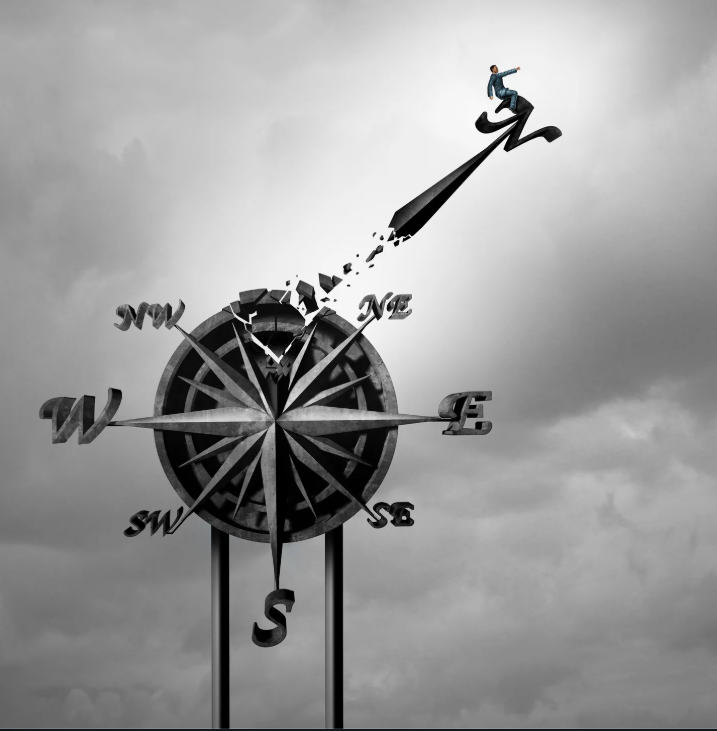
The Reality Reset: Reclaiming Control of Your Narrative
If the world refuses to offer you a seat at the table? Create your own dining area.
The path lacks accessibility? Create a new one.
Here’s how to recover power, purpose, and potential after everything is taken from you:
1. Challenge the Default Definition of “Success”
Most people learn their definition of success from sources that have no understanding of your circumstances.
Measuring your success based on a system that ignores your reality leads to constant disappointment.
Define success on your own terms by evaluating your individual strengths, challenges, and life purpose.
Reality Reset Move:
Instead of “I must follow the traditional path,” → “I will create an approach that suits my requirements.”
Instead of “I have to prove my worth to others,” → “My existence is already valuable—my work simply reflects my vision.”
When I decided to create my own platform guiding people toward purpose through adversity, I discovered a life mission that surpassed all previous meanings.
2. Hack the System to Work for You
The world isn’t fair? Cool. Learn to play a different game.
The most successful individuals don’t work harder than everyone else—they work smarter, using strategic intelligence to achieve their goals while maintaining control.
Here are tactical advantage moves to gain the upper hand:
- Use Technology as Your Equalizer — Leverage assistive tech, AI, and automation tools to overcome limitations.
- Control Your Narrative — Instead of waiting for others to understand your worth, claim control over your personal branding. Turn your experience into an asset instead of a weakness by presenting it as strategic potential.
- Build Automatic Support Systems — Create networks through which your success grows without requiring extra effort by establishing mentorships, advocacy circles, and strategic connections.
Real Talk Detour:
Most people try to succeed despite their barriers.
Success happens when you begin to use your obstacles as the foundation for victory.
The real power comes when you learn to succeed because of them.
Through my vision loss, I developed listening abilities, pattern recognition skills, and an intuitive understanding that most people never learn to master. My disability enabled me to build competitive advantages in coaching and communication that emerged as direct results of my experiences.
What special perspective or ability has your difficulty forced you to develop that others lack?
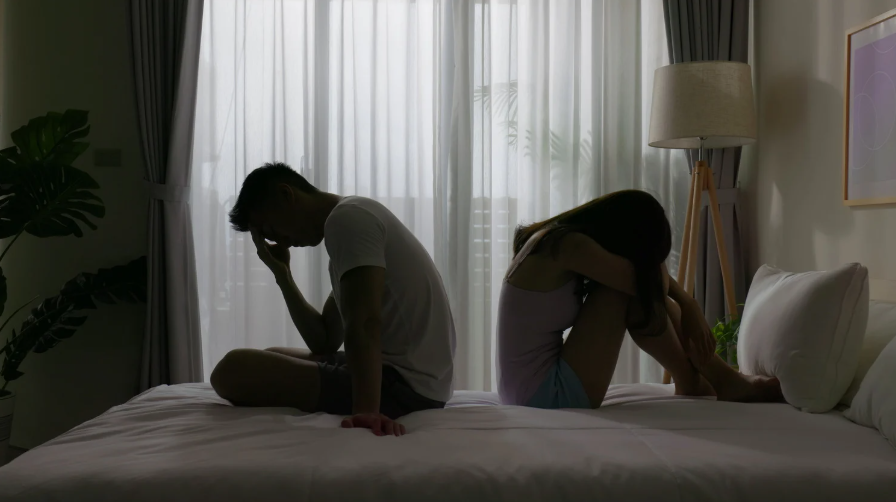
The Relationship Revolution: When You Stop Apologizing for Who You’ve Become
One of the most painful revelations in my journey came when relationships I thought were unbreakable were torn apart by my new reality.
My marriage ended. Some friends disappeared. Family members didn’t understand how to connect with this new person I had become.
And for years, I chased the ghosts of those relationships, trying to recreate what was lost, convincing myself that if I just tried harder, if I just became “normal” enough again, they would return.
This pursuit nearly destroyed me.
The breakthrough arrived when I finally asked myself, “Perhaps the relationships I’m grieving weren’t the ones that would help me reach my greatest potential?”
Were those individuals who distanced themselves when faced with difficulties the ones who should witness my personal evolution?
As I stopped trying to re-enter outdated connections and welcomed genuine relationships that accepted me fully as I existed, my life transformed beyond all expectation.
These weren’t sympathetic caretakers or obligated family. The people who became my true friends, mentors, and eventually my partner understood my challenges as essential aspects of the person I had become.
If I Were Coaching You 1:1 About Your Relationships:
I’d ask you to take a moment right now. Close your eyes. Take three deep breaths.
Now envision the five most important people in your life. Ask yourself: Do these people know who I really am? Do they see my genuine potential? Or are they relating to an outdated version of me that no longer exists?
The environment you accept always reflects your true self-image. When people treat you as limited, broken, or less than, it becomes challenging to see your own power.
Choose people who deserve your energy, your dreams, and your vulnerability. You don’t need everyone from your past to continue into your future.
From Corporate Dropout to Movement Builder: A Transformation Story
James was a 42-year-old finance executive until a rare autoimmune disorder caused him to develop chronic fatigue so severe that he could only work four hours a day.
“I thought if I just pushed harder, my body would eventually cooperate,” James told me during our first session, his voice tight with frustration. “Instead, I just kept getting worse.”
His company gradually pushed him out. His industry connections faded away. His identity as a high-performing breadwinner lost its meaning. He’d spent a year pushing his body to regain his former life. The result was only more fatigue and depression.
James found himself in the “restoration trap”—investing his scarce energy into reestablishing a system that no longer suited the person he was evolving into.
Our first step involved examining whether his energy limitation could be a feature instead of a flaw. Could his condition lead him to discover methods that create value while minimizing energy expenditure?
Within six months, James had:
- Abandoned his fight against his new reality and began designing his life based on it
- Through his condition, gained insights about sustainability and long-term performance
- Created a consulting program teaching financial firms how to boost performance without driving employees to burnout
- Built a business model requiring only twenty hours of hands-on involvement each week
The irony? His current earnings exceed his previous executive salary, his influence extends to thousands of people instead of just his team, and his work fights against the destructive productivity culture that contributed to his health issues.
In James’s words: “This condition remains the worst thing I would wish on anyone. But since developing it, I can honestly say I’m producing better results now than in my healthy days. My limitations forced me to develop an intelligent, sustainable system that defines my success today.”
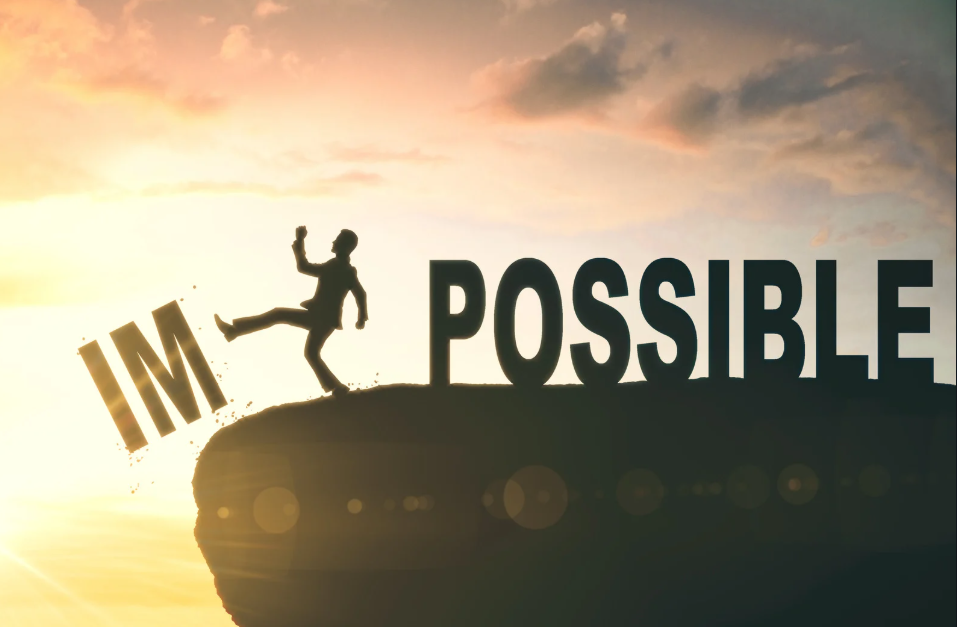
The Clarity Formula: How Catastrophe Becomes Your Greatest Teacher
When everything collapses, you’re left with no choice but to answer the question most people spend their lives avoiding:
What actually matters?
Not what should matter. Not what used to matter. Not what others think should matter.
What truly, genuinely matters to YOU.
Catastrophe strips a system down to its essential components, removing everything else. It’s clarifying in the most painful way possible. With limited energy, you must select activities that remain valuable despite your reduced capacity.
The personal apocalypse delivers radical clarity as its hidden blessing.
Here’s how to harness it:
1. The Essential Inventory
What remained important to you during your most challenging times? These represent your core values—the essential qualities that transcend your professional identity and abilities.
For me, connection, impact, and intellectual growth became my priorities. My vision loss eliminated concerns about status, appearances, and others’ approval.
2. The Energy Audit
Your limited resources of energy, time, and focus should be directed toward activities that produce the highest possible return. Which activities, people, and pursuits energize you rather than drain you?
Deep conversations energized me, while small talk drained me. Creative problem-solving fueled me, while routine tasks depleted me. This became my roadmap for where to focus.
3. The Leverage Point
What unique perspective or skill did your challenge teach you that others lack?
My vision loss helped me learn to listen differently and develop my intuition. These became my competitive advantages in coaching—not despite my disability, but because of it.
- “What if your biggest challenge isn’t your greatest limitation but your most valuable differentiator?”
The Identity Revolution: Becoming Who You Were Meant to Be All Along
Here’s a truth that took me years to understand:
The person you become after a catastrophe isn’t just a patched-together version of who you were before. They’re often the person you were always meant to be, finally freed from the constraints of expectation and convention.
Think about it:
How many of us are living lives shaped primarily by momentum rather than intention? We make choices early—career paths, relationship patterns, identities—and then spend decades following the trajectory those choices set in motion.
We mistake familiarity for fit. We confuse comfort with fulfillment.
Until something comes along that’s powerful enough to break that momentum.
Something like losing your vision. Or your health. Or your marriage. Or your career.
And in that painful breaking open is the opportunity to ask, What if this isn’t just an ending? What if it’s the beginning I never knew to look for?

Real-World Mindset Shifts That Change Everything
Scenario 1: Career & Impact
Old Mindset: “I’ve lost my professional identity and value.”
Shifted Mindset: “My experience gives me insights and resilience that make me a high-value leader in ways I couldn’t have been before.”
New Approach: Instead of trying to force yourself back into old career models, you identify the unique perspective your journey has given you and build a platform around that expertise.
Result: You don’t just reclaim professional value—you create more impact than was possible in your previous path.
Scenario 2: Personal Identity & Self-Worth
Old Mindset: “I’m a diminished version of who I used to be.”
Shifted Mindset: “I’m a more authentic, insightful, and powerful version of who I was always meant to become.”
New Approach: Instead of measuring yourself against your old capabilities, you redefine success based on depth, impact, and alignment rather than external metrics.
Result: You develop unshakable self-worth that isn’t dependent on what you can or can’t do, but on who you fundamentally are.
Scenario 3: Relationships & Connection
Old Mindset: “I need to prove I’m still worthy of the relationships I had.”
Shifted Mindset: “The right relationships will recognize my worth without me having to prove anything.”
New Approach: You stop trying to fit yourself into connections that no longer fit who you’re becoming and instead cultivate relationships that honor your complete self—challenges included.
Result: You build deeper, more authentic connections than were possible when you were hiding behind performance and perfection.
The Hard Truth About Transformation
The journey from victim to creator isn’t easy. It isn’t pretty. It isn’t a straight line.
There were days I backslid into self-pity. Weeks when anger consumed me. Months when I questioned everything.
And if anyone tells you their transformation was seamless, they’re selling you a fantasy.
But here’s what’s real: Every time you choose self-determination over self-pity, you become stronger. Every time you refuse to let your circumstances define your potential, you reclaim power.
When I finally let go of who I was “supposed” to be and embraced who I could become—a guide for others navigating their own darkness—purpose rushed in to fill the void that loss had created.
The 5 Non-Negotiables of Resilient Redefinition
1. Radical Self-Ownership
No waiting for permission. No excuses. Taking full responsibility for constructing a meaningful life remains essential no matter what life brings.
2. Relentless Adaptability
The solution to your problem exists—you just haven’t discovered it yet. Test and learn new approaches until you find what works for your unique situation.
3. Strategic Discomfort
Growth happens at the edge of your comfort zone. Create daily opportunities to push beyond your boundaries and familiar patterns.
4. Selective Attention
Your focus determines your reality. Direct your attention toward what supports growth while ignoring limitations and negative influences.
5. Expansive Thinking
Instead of asking, “Can I do this?” ask, “How can I make this work?” The questions you choose in any given moment generate the responses you experience.

The Final Permission Slip: Becoming the Author of Your Story
Every person carries invisible permission slips that dictate what they’re allowed to desire, achieve, and create.
Most of these permission slips were written by people who cannot comprehend what you’re truly capable of. People who’ve never faced what you’ve faced. People who are living inside their own limitations.
When you tear up those permission slips, you gain the freedom to author your own life.
When you declare, This is MY life. MY value. MY definition of success.
The world tells you that massive disruption restricts your potential, but we know the opposite truth:
You discover new possibilities when your entire world needs rebuilding.
Your priorities become crystal clear after everything is stripped away.
Your authentic power becomes visible when you must access it because external support has vanished.
The real question is not how your challenge will restrict your life.
The question is: Will you allow it to?
Take control. Rewrite the script. Break every barrier.
Make the world adjust to you—not the other way around.
The pen is in your hands now. What story will you write?
Ready to Transform Your Disruption Into Direction?
If this resonates, and you know you’re ready to stop carrying it all alone—this is exactly what I help people do.
I guide high-achievers through life-changing disruptions to create something more powerful than what they lost. Not by returning to who they were, but by becoming who they were always meant to be.
“You will not discover your most powerful self through comfort. Adversity forces you to transcend what you thought was possible.” — Shay Edmonds
Frequently Asked Questions
How do I rebuild my identity after a major life disruption?
Rebuilding your identity starts with giving yourself permission to evolve beyond who you used to be. Instead of trying to restore what was lost, focus on what your new circumstances have taught you, the strengths you’ve developed through adversity, and the values that remain important to you. Your new identity won’t be a diminished version of your old self—it will be something entirely new and potentially more authentic and powerful.
Can personal catastrophe actually make your life better in the long run?
While no one would choose catastrophe, many who’ve lived through it discover that the forced redesign of their life leads to greater authenticity, deeper relationships, and more meaningful work. The key is moving beyond the restoration mindset (trying to get back what you lost) and into the reinvention mindset (using your experience as the foundation for something new). It’s not that your life becomes better despite the catastrophe—it becomes better because of how you choose to respond to it.
How do I handle relationships that can’t adapt to my new reality?
Painful as it is, not every relationship is meant to survive major life transitions. Instead of trying to force outdated connections to work, focus on cultivating relationships that honor who you’re becoming, not who you used to be. The right people will see your challenges as an integral part of who you are, not as problems to be fixed or overcome. Remember: the environment you accept reflects your self-image. Choose people who see your potential, not just your limitations.
What if I don’t know what I want my new life to look like?
This is completely normal. Start by identifying what still matters to you—your core values—and what energizes rather than drains you. Then ask yourself: What unique perspective has my challenge given me? What do I understand now that I couldn’t have understood before? The answers will point toward possibilities that align with who you’re becoming. Remember, this is an iterative process—you don’t need to have it all figured out at once.
Will intentional solitude help me rebuild after personal catastrophe?
Intentional solitude can be a powerful tool for reconnecting with yourself after major disruption. It creates space to process grief, rediscover your values, and hear your own thoughts without the influence of others’ expectations. However, the key word is “intentional”—solitude with purpose, not isolation. Use this time to journal, reflect, and reimagine possibilities. Then gradually reconnect with people who support your evolution rather than expecting you to remain unchanged.