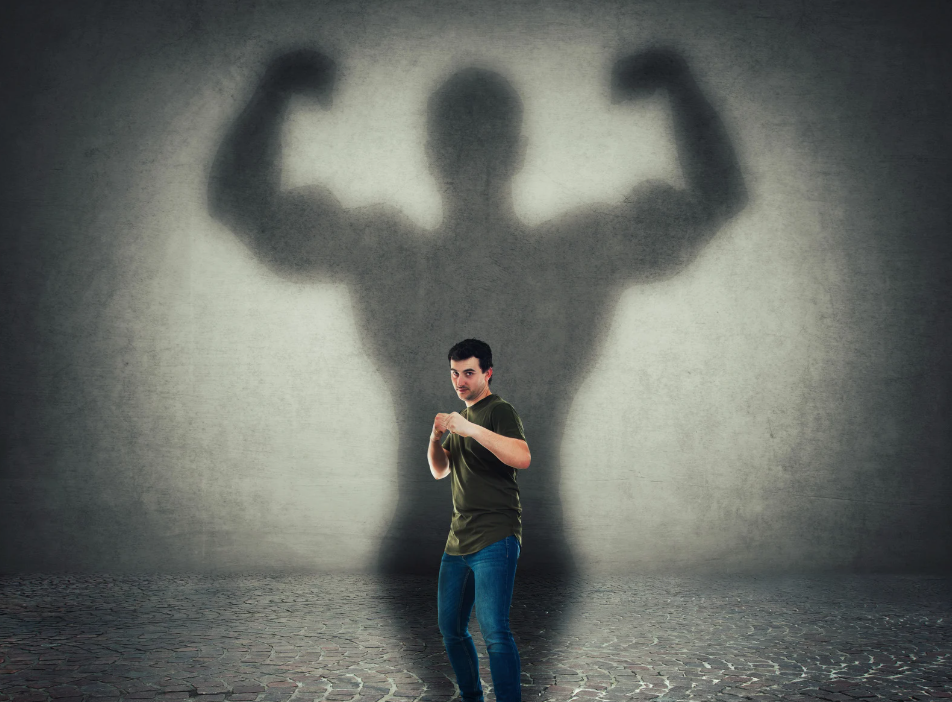
The panic is everywhere if you look for it—in comment sections, in podcasts, and in late-night conversations between fathers and sons. This idea that masculinity is under attack. That men are being neutered, emasculated, and erased.
I call bullshit.
What’s actually happening is far more revolutionary. Masculinity isn’t being erased. It’s being redefined. Not softer. Not weaker. Just… finally real.
What’s dying is the version of masculinity built on suppression. On stoicism that isolates. On dominance that disconnects. On a performance of strength so rigid that the man underneath it can’t breathe.
What’s waking up? A generation of men who are done being emotional prisoners. Who are angry—but also aware. Strong—but not brittle. Tender—but not apologetic.
Men who are tired of pretending that vulnerability is weakness.
Men like me. And probably—if you’re reading this—men like you too.
The Moment Everything Changed
I remember sitting in my parked car outside my office, knuckles white against the steering wheel, jaw clenched so tight my teeth ached. Success by every external measure—the corner office, the respected position, the salary that bought the freedom that was supposed to feel like enough.
And I couldn’t breathe.
Couldn’t move.
Couldn’t name the weight crushing my chest.
What I didn’t realize then was that my body was attempting a revolution. It was staging a coup against decades of emotional suppression. Against the armor I’d mistaken for strength. Against the silence I’d mistaken for power.
My nervous system was saying, Enough.
The masculine paradigm I’d inherited was killing me from the inside. Not because masculinity itself is toxic—but because what I’d been taught to call “being a man” was actually just being a prisoner to fear.
Fear of weakness. Fear of failure. Fear of being seen as anything less than invincible.
The Armor We Never Asked For
From our earliest years, most men are handed pieces of armor:
- Don’t cry.
- Don’t feel too deeply.
- Don’t need too much.
- Don’t show uncertainty.
- Don’t ever look like you don’t have your shit together.
So what did we do? What any child would do when the adults around him make love conditional on obedience.
We armored up.
We buried parts of ourselves so deep we forgot they were there.
With women. With work. With working out. With anger. With silence. With emotional absenteeism disguised as leadership.
But that wasn’t masculinity.
That was fear with a deep voice and a clenched jaw.
And you can only live like that for so long before something inside you snaps.
For me, it was burnout that finally cracked the armor. For others, it’s divorce. Loss. Health crises. Midlife. Becoming a father and suddenly realizing you have no emotional language to pass on to your children.
Whatever form the breaking point takes, it arrives with the same truth: the masculine paradigm we inherited is insufficient for the complexity of our actual lives.
I Wore Every Masculine Costume They Gave Me
Provider. Protector. Performer. Fixer. Don’t flinch. Don’t cry. Don’t feel. Don’t fail.
And yeah—I could play the part.
Until the world pulled the fucking rug out and exposed what was underneath:
A man who had never learned how to process pain. Who equated asking for help with humiliation? Who thought if he just worked harder, achieved more, and stayed tougher—he’d finally feel peace?
But peace didn’t come. Because peace doesn’t come from pretending you’re unshakable.
It comes from becoming honest.

If I Were Coaching You Right Now, I’d Say This:
Your worth as a man was never tied to your ability to suppress emotion.
That’s not strength—that’s suffocation.
Real strength isn’t an absence of vulnerability. It’s the courage to be vulnerable strategically. To know when to armor up and—more importantly—when to take the armor off.
To understand that feeling deeply isn’t weakness. It’s intelligence. Your emotions are data. And when you ignore data, you make bad decisions.
For decades, we’ve been sold a version of masculinity that’s all about never showing cracks. Never admitting uncertainty. Never revealing that underneath the competence and confidence is a human being who sometimes doesn’t know what the fuck he’s doing.
But imagine a masculinity that includes:
- The capacity to feel without being ruled by feeling
- The ability to be tender without apology
- The strength to protect through presence, not control
- The wisdom to lead by listening first
- The courage to rebuild your identity when the old one no longer serves
That’s not weakness. That’s evolution.
💡 Real Talk Moment: If this is hitting hard, you’re not alone. Start your reinvention journey at https://MindsetRewired.com. Coaching is open now.
This Isn’t Just Another “Men Need to Get in Touch with Feelings” Piece
If you’re rolling your eyes right now, I get it.
We’ve all read the oversimplified “men just need to cry more” takes.
This isn’t that.
I’m not saying masculinity should be diluted or that men should become more like women. That’s not integration—that’s just another form of suppression, swinging the pendulum from one extreme to another.
What I’m talking about is wholeness.
When we deny parts of our humanity—whether it’s vulnerability, anger, tenderness, or strength—we don’t become more powerful. We become fragmented. Divided against ourselves. And a divided man is a weakened man, regardless of how much weight he can bench or how many zeroes are in his bank account.
The Shadow Cost of Traditional Masculinity
What’s the price we pay for maintaining the illusion of invulnerability?
- 70% of suicides are men
- Our friendships are often activity-based rather than emotionally intimate
- We die earlier, partly from stress-related diseases
- Many of us are functional addicts—using work, alcohol, porn, or exercise to numb what we can’t process
- We’re more likely to die alone because we never learned how to build support networks
- The pressure of performance creates erectile dysfunction, which creates shame, which creates more dysfunction
- We learn to bond through competition rather than connection
This isn’t about blame. The generations before us did the best they could with what they knew.
But now we know better. And knowing better means doing better.
Here’s What Gets Twisted in the Conversation
When we talk about “toxic masculinity,” we’re not saying masculinity itself is toxic. We’re saying there’s a version of masculinity that becomes toxic when it’s based on suppression, dominance, and emotional avoidance.
It’s like alcohol. A glass of wine with dinner? Potentially beneficial. A bottle of vodka every night? That’s going to destroy you from the inside out.
Here’s what masculinity used to mean in broken systems:
- Power = Control
- Love = Possession
- Leadership = Suppression
- Pain = Weakness
- Silence = Strength
- Presence = Providing
Here’s what it actually means in integrated men:
- Power = Accountability
- Love = Freedom
- Leadership = Listening
- Pain = Honored
- Silence = Reflection
- Presence = Presence
This isn’t the end of masculinity.
- It’s the end of shallow masculinity. The end of performative strength. The end of stoic shame.
Real Talk Detour: Your Nervous System Is Screaming
That tension in your jaw? The insomnia? The irritability that comes out of nowhere? The low-grade anxiety that never quite goes away? The sexual issues you don’t talk about? The vague sense that something is wrong even when everything looks right?
That’s not weakness or failure.
That’s your nervous system in chronic fight/flight/freeze, trying to manage the cognitive dissonance between the man you’re pretending to be and the man you actually are.
Your body keeps the score. And it’s trying to tell you something.
Listen.

What Evolved Masculinity Looks Like in Real Life
Let’s stop theorizing. Let’s get practical.
1. A Man Who Can Feel Without Drowning
The old paradigm teaches us that emotions are like quicksand—step in and you’ll be consumed. So we learn to walk around them, avoid them, or bulldoze through them.
But integrated masculinity understands emotions are more like weather. They move through you. They change. They pass.
You don’t have to become the storm to acknowledge there’s thunder in the distance.
A man who can cry without collapsing isn’t weak—he’s metabolizing his experience instead of letting it fester into disease or dysfunction.
Not because he’s broken. Because he gives a shit.
2. A Man Who Can Hold Space Without Fixing It
We’re conditioned to be solutions-oriented. See problem, fix problem. Apply logic, force change, get results.
This works beautifully for broken appliances and business strategies.
It fails catastrophically with human hearts.
When someone you love is in pain, sometimes the most powerful thing you can do is shut the fuck up and listen. Not because you’re passive. Because presence—true, embodied presence—is one of the most profound acts of strength there is.
She doesn’t need your solution. She needs your presence.
Big difference.
3. A Man Who Can Walk Away From Chaos, Not Just Fight Through It
We glorify the man who stays in the burning building, who fights impossible odds, who never gives up no matter what.
And yes, perseverance matters.
But equally important? Discernment.
Knowing when to fight and when to walk away. When to push through and when to change direction. When loyalty becomes self-destruction.
Sometimes strength is staying. Sometimes it’s leaving. But it’s never abandoning yourself to appease someone else’s dysfunction.

If I Were Coaching You About Self-Identity, I’d Say This:
Your identity as a man isn’t a fixed point you need to defend. It’s a living practice that evolves as you do.
The question isn’t “Am I man enough?”
The question is, “Am I present enough? Authentic enough? Aligned enough with my own deepest values?”
When you stop trying to prove your worth through external validation and start anchoring it in internal congruence, everything shifts.
You become unshakable not because you never feel fear, but because you’ve learned to move through it with integrity.
💡 Real Talk Moment: Ready to build a new definition of manhood that actually works? Start rebuilding at https://MindsetRewired.com. No bullshit, just transformation.
4. A Man Who Knows That Anger Isn’t the Only Emotion He’s Allowed to Feel
For many men, anger becomes the emotional funnel through which every other feeling must pass:
Sadness becomes anger. Fear becomes anger. Hurt becomes anger. Disappointment becomes anger.
Not because we’re naturally more aggressive—but because anger is often the only “acceptable” emotional expression we were allowed as boys.
Integrated masculinity reclaims the full emotional spectrum, understanding that range isn’t weakness—it’s precision. It’s intelligence.
Rage isn’t clarity. It’s often just grief in disguise.
Let it speak—but don’t let it lead.
5. A Man Who Builds With His Heart, Not Just His Hands
The capacity to create—whether it’s businesses, art, communities, or families—is central to masculine energy. We’re wired to build, to leave something behind that matters.
But too often, we build empires while our inner lives crumble.
Integrated masculinity understands that what you build externally is only as solid as what you’ve built internally.
Purpose. Legacy. Depth. Connection. That’s not soft. That’s dangerous in the best possible way.
Client Story: From Armor to Integration
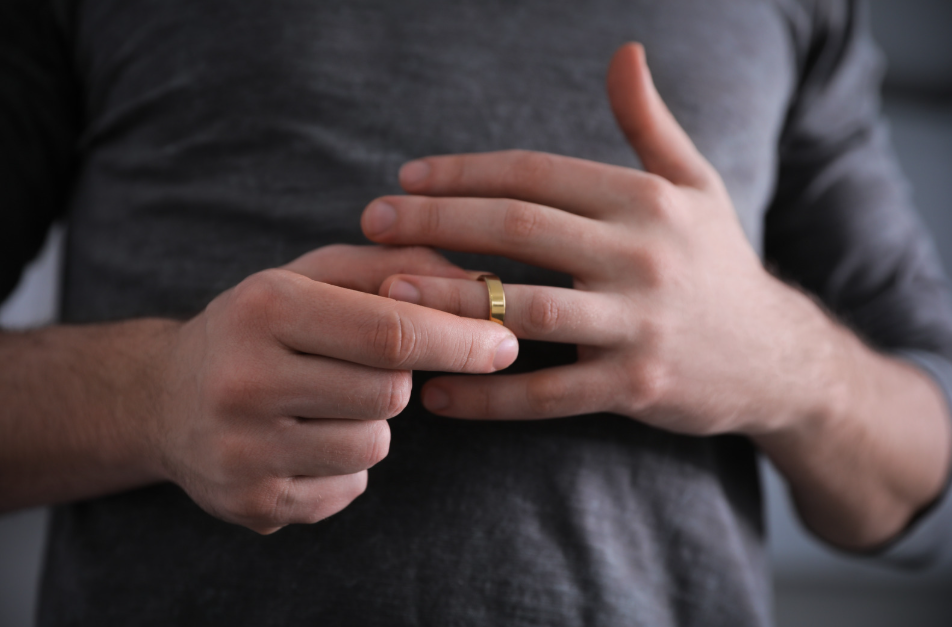
I once worked with a client—let’s call him Mark—who came to me after his divorce. Successful entrepreneur, physically fit, respected in his industry. By all external metrics, he had rebuilt his life after the marriage ended.
But something was off. He described it as “going through the motions.” Sex was mechanical. Work was a grind. His relationship with his kids was strained.
“I’m doing everything right,” he told me, frustration evident. “I’m showing up. I’m providing. I’m stable. Why does everything still feel so…empty?”
Our work together revealed the truth: he had rebuilt his life using the same blueprint that had failed him before. The same emotional suppression. The same performance of strength without the vulnerability that creates actual connection.
He was living from the old masculine paradigm where worth equals production and strength equals silence.
When I asked him what he was afraid would happen if he allowed himself to be more emotionally authentic, his answer was revealing: “I’m afraid I’ll fall apart and never put myself back together.”
This is the core fear behind rigid masculinity—that emotion is a runaway train. That once we start feeling, we’ll never stop.
But that’s not how integration works.
Over six months, Mark began the process of selective disarmoring. Learning when vulnerability serves and when boundaries protect. Understanding that his nervous system had been in sustained fight-or-flight for decades, creating physical symptoms he’d attributed to “just getting older.”
The transformation wasn’t immediate or linear. Integration rarely is.
But gradually, something shifted. His insomnia improved. His relationships deepened—not just with women, but with male friends. The constant background anxiety that had been his lifelong companion began to quiet.
“I thought becoming more emotionally aware would make me weak,” he told me in our final session. “But I actually feel more powerful, like I’m finally operating at full capacity instead of fighting myself every step of the way.”
That’s what integration looks like. Not soft. Not diminished. Whole.
The Shadow Work That Changes Everything
One of the most transformative practices for men reclaiming their emotional intelligence is shadow work—the process of excavating the disowned parts of ourselves that operate from the unconscious.
Here’s what it looks like in practice:
- Identify your judgments. What qualities in others trigger immediate negative reactions in you? These are often projections of your own disowned traits.
- Follow the fear. What parts of yourself are you afraid to acknowledge? The workaholic is afraid of being lazy. The perfectionist is afraid of being flawed. The stoic is afraid of being overwhelmed by emotion.
- Reclaim through integration. Instead of suppressing these qualities, how might they serve you if consciously embraced? How might laziness teach you about necessary rest? How might acknowledging flaws create authentic connection? How might emotional fluency enhance your decision-making?
The shadow isn’t your enemy. It’s the parts of yourself you’ve been taught to deny—and denying parts of yourself has never made you stronger. It’s made you divided.
Men’s Nervous Systems Are Different (But Not in the Way You Think)
The physiology of stress and trauma looks different in male bodies—not because we’re less emotional, but because we process differently.
- Men tend to have higher baseline cortisol (stress hormone) levels
- We’re more likely to experience “dorsal shutdown” (freeze) when chronically stressed, which presents as emotional flatness or numbness
- Our autonomic nervous systems often prioritize fight/flight over tend/befriend responses
- We’re neurologically more susceptible to emotional isolation, making connection even more vital for being
When we tell men to “just express their feelings,” we’re missing a crucial piece: many men literally can’t access their emotions the same way others might. The neural pathways haven’t been developed. The physiological patterns are too ingrained.
That’s why true masculine evolution isn’t just about “opening up.” It’s about rebuilding neural pathways. Retraining the nervous system. Creating new patterns of regulation and expression that honor our masculine essence while expanding our emotional capacity.
This isn’t therapy. It’s neuroplasticity.
The Five Stages of Masculine Awakening
In my work with men navigating identity reconstruction, I’ve observed a fairly consistent pattern of masculine awakening:
Stage 1: Unconscious Performance
You play the role you were given without questioning it. You measure success the way you were taught—usually through achievement, provision, and stoic strength. Emotional disconnection isn’t a problem because it’s normalized.
Stage 2: Conscious Discomfort
Something triggers awareness that the performance isn’t working. Maybe it’s burnout, relationship failure, health issues, or just the quiet desperation of a life that looks good on paper but feels empty in reality.
You start to feel the dissonance between who you’re pretending to be and who you actually are.
Stage 3: Resistance and Experimentation
This is the “fuck you, then what?” stage. You know the old paradigm isn’t working, but you don’t have a new one yet. You might swing between extremes—rejecting all traditional masculinity or doubling down on it in moments of insecurity.
You start testing new ways of being, often clumsily. You might overshare then shut down. Push people away, then cling. It’s messy because you’re rewiring decades of conditioning.
Stage 4: Integration
You begin developing discernment about what aspects of traditional masculinity actually serve you and which ones don’t. You stop seeing vulnerability and strength as opposites and start experiencing how they complement each other.
This is where the real transformation happens—not through rejection of masculinity, but through conscious integration of all parts of yourself.
Stage 5: Embodiment
The new paradigm becomes natural. You no longer have to think about when to be vulnerable and when to be boundaried—you feel it instinctively. Your nervous system recalibrates. The internal war subsides.
You become a model of integrated masculinity for others, particularly younger men looking for examples of how to be whole without being diminished.
Most men I work with arrive somewhere between stages 2 and 3. The journey to stages 4 and 5 is what creates not just personal liberation but cultural transformation.
Journey Prompt: Where Are You Right Now?
Take a moment. Close this screen if you need to. And ask yourself honestly:
- Which stage of masculine awakening am I in right now?
- What parts of myself have I disowned in the name of “being a man”?
- Where in my body do I feel the most tension or disconnection?
- What would change in my relationships if I allowed myself to be more emotionally honest?
- What am I afraid would happen if I let go of the performance?
There are no right or wrong answers. Only your truth. And your truth—however uncomfortable—is the starting point for everything that follows.

Rethinking Masculine Leadership in a World That Needs It
The world is crying out for a new kind of masculine leadership. Not dominance disguised as direction. Not control masked as confidence.
But embodied presence. Fierce compassion. The courage to stand for something without dehumanizing those who stand elsewhere.
In a world of extremes, integrated masculinity is the radical middle path. Not because it’s moderate or lukewarm—but because it’s whole. Complete. All sides held in dynamic tension rather than fragmented and at war.
What does this look like in practice?
- The CEO who leads with inspiration instead of intimidation
- The father who models emotional courage instead of emotional suppression
- The partner who creates safety through presence instead of control
- The friend who offers depth instead of distraction
These aren’t “soft skills.” They’re survival skills for a world that can no longer afford the luxury of fragmented leaders.
And make no mistake—the cost of remaining fragmented is catastrophic. Not just for individual men, but for everyone who depends on them.
The Biological Reality of Male Emotion
Let’s get neurological for a moment.
The male brain processes emotion differently than the female brain. Not better or worse—just different. And understanding these differences is crucial for men seeking integration.
The male brain tends to:
- Have fewer neural connections between emotional centers and verbal processing centers
- Process emotion more heavily in the right hemisphere
- Have stronger connections between emotional centers and action centers
This means that for many men, emotion is experienced more physically than verbally. More as activation than articulation.
That’s why asking a man, “What are you feeling?” can draw a blank. Not because he isn’t feeling, but because his biological wiring makes translating that feeling into words more challenging.
The path to emotional integration for men often starts not with talking, but with somatic awareness. Learning to recognize how emotions manifest in the body:
- Where tension gathers
- How breath changes
- What sensations emerge
Only then can we begin bridging the gap between physical experience and verbal expression.
This isn’t excusing emotional immaturity. It’s acknowledging biological reality as the starting point for growth.
Final Truth
Masculinity isn’t weak. But the version of it that tells you to suffer in silence, deny your truth, and measure your worth by your paycheck?
That version needs to die. And thank fucking God—it finally is.
You are not too emotional. You are not too intense. You are not too soft for this world.
You are exactly what this world needs: A man who feels. A man who leads with depth. A man who protects without control, listens without fixing, and loves without losing himself.
This isn’t just about personal healing. It’s about creating a world where our sons don’t have to unlearn what broke us. Where masculinity isn’t defined by what it suppresses but by what it creates, protects, and nurtures.
Where being a man means being human first.
Where our strength comes not from rigid perfection but from courageous integration.
You ready?
Then welcome home.
This is what masculinity looks like now.

Ready to Rewire Your Masculine Identity?
If this hit home and you’re tired of living divided against yourself—this is exactly what I help men do every day.
I’ve walked this path. I’ve done this work. And I’ve built a methodology specifically designed for men navigating identity reconstruction.
The Mindset Rewired program combines nervous system regulation, shadow integration, and practical tools for navigating relationships, purpose, and personal power as an emotionally integrated man.
Don’t do this work alone. Evolution is harder in isolation.
FAQ: Masculinity Awakening & Integration
What exactly does “integrated masculinity” mean?
Integrated masculinity means reclaiming all aspects of yourself—vulnerability alongside strength, emotion alongside logic, tenderness alongside power—without seeing them as contradictions. It’s about wholeness rather than fragmentation, bringing your full self to your life rather than only the parts deemed “acceptably masculine” by outdated standards.
How do I know if I’m ready for this work?
You’re ready if you feel the disconnect between your external success and your internal experience. If you’re exhausted from the performance. If relationships feel hollow despite your best efforts. If you sense there’s more to life, to connection, to purpose—but you can’t access it through the tools you’ve been given. Readiness isn’t about having it all figured out; it’s about being honest that your current approach isn’t working.
Can I become more emotionally integrated without losing my edge?
Absolutely. In fact, emotional integration sharpens your edge. When you’re not wasting energy fighting yourself, suppressing emotions, or maintaining armor, you have more resources available for decisive action. The most dangerous men I know aren’t the ones who never feel—they’re the ones who feel fully and choose their response with clarity rather than reactivity.
Will becoming more emotionally aware affect my leadership abilities?
Yes—it will enhance them. Leaders who can read the emotional landscape, who understand their own triggers and patterns, and who can create psychological safety for their teams—these leaders consistently outperform those relying on outdated command-and-control models. Emotional intelligence isn’t soft—it’s strategic.
What happens if I don’t do this work?
Look around. Men leading lives of quiet desperation. Epidemic levels of male suicide. Relationships that never reach their potential. Purpose that remains unfulfilled. Bodies breaking down from unprocessed stress. The cost of remaining fragmented is already evident in every metric of male well-being. The question isn’t whether you can afford to do this work—it’s whether you can afford not to.