I watched him sit across from me, shoulders curved inward like parentheses around a life he no longer recognized. Three months after the divorce papers. Six months after the promotion fell through. Two years of sleeping four hours a night.
“I just need to become someone stronger,” he said, voice steady but eyes fixed on the floor. “Someone who doesn’t feel this way.”
I’ve heard a thousand versions of this same sentence from clients walking through my door at Mindset Rewired. Each person believing healing means transformation into someone new—someone better, stronger, and less broken.
But healing isn’t becoming someone new. Healing is remembering who you were before trauma buried you beneath layers of adaptation, performance, and survival.
The Myth of Self-Improvement After Trauma
Everyone talks about “becoming the best version of yourself,” Like healing is some kind of makeover. Like you’re supposed to wake up one day, shiny and unrecognizable—calm, enlightened, unbothered, and smiling through kale smoothies and relationship boundaries.
Let’s be honest—that’s complete bullshit.
The self-help industry is built on the premise that you’re fundamentally flawed. That you need fixing. That who you are isn’t enough.
But what if the problem isn’t that you need improving?
What if the problem is that you’ve been taught to wage war against who you actually are?
If I were coaching you right now, I’d look you straight in the eyes and ask:
“What if there’s nothing wrong with you that wasn’t put there by someone else’s limited vision of who you should be?”
Sit with that discomfort.
Because healing isn’t becoming “better.” It’s becoming real again.
You’re Not Evolving. You’re Excavating Your Authentic Self
Let me say this clearly:
Healing isn’t about adding layers. It’s about peeling them back.
It’s not:
- “I need to be more confident.”
- “I need to be more disciplined.”
- “I need to be less emotional.”
- “I need to be tougher.”
It’s:
- “I used to trust myself, and then I stopped.”
- “I used to speak freely, until someone punished me for it.”
- “I used to dream bigger, until I got laughed at.”
- “I used to feel safe in my own skin, until the world convinced me I wasn’t enough.”
You’re not broken. You’re layered. And healing is how you unlearn the bullshit that told you to shrink.
💡 Real Talk Moment: If this is hitting hard, you’re not alone. Start your reinvention at https://MindsetRewired.com. Coaching is open now.

The Day Your Nervous System Made a Decision
Most people think trauma is just the big stuff. The car accidents. The invisible illness diagnosis. The divorce papers. The obvious neglect.
But your nervous system doesn’t categorize pain by social norms or Instagram-worthy backstories.
Your body just knows threat.
And a threat doesn’t have to be dramatic to be damaging. Sometimes it’s quiet. Persistent. Dressed up as love or guidance or protection.
It’s the parent who withheld approval until you performed. It’s the relationship where your voice got smaller every month. It’s the friendship circle where authenticity was punished. It’s the workplace where your humanity was inconvenient.
Your nervous system registered every moment of this. And it made executive decisions to keep you safe:
Be quieter. Be smaller. Hide that part. Perform this way. Never trust. Never relax. Always prepare.
These weren’t character flaws. They were survival mechanisms.
Let me ask you something uncomfortable:
What version of yourself did you have to murder to survive your life?
The one who spoke up? The one who set boundaries? The one who believed they deserved more? The one who wasn’t afraid to want big things? The one who could rest without guilt?
That’s the version your healing is trying to resurrect.
Why the Real You Got Buried Under Trauma’s Weight
Let’s get into it.
We don’t become people-pleasers, perfectionists, avoiders, overachievers, or emotional chameleons for fun.
We adapt.
Because adaptation equals survival.
You learned to become easy to love. You learned to perform strength. You learned to keep the peace even when it tore you apart. You learned to twist yourself into versions that kept you accepted, safe, employed, or married.
And over time?
- “You forget where the mask ends and you begin.”
That’s not failure. That’s survival.
But now? You’re not surviving anymore. You’re ready to come home.
The Addiction to Self-Improvement Is Just Another Mask
Our culture is obsessed with self-improvement.
Billion-dollar industries built on the premise that you’re never quite right, never quite enough, always one purchase away from wholeness.
I see it in my clients every day—the frantic search for the right program, the right morning routine, the right meditation app, the right supplement stack, the right combination of therapy modalities that will finally make them acceptable.
You know what I’m talking about.
- The person who becomes a “positive vibes only” spiritual bypasser to avoid confrontation.
- The person who becomes obsessed with fitness to outrun their grief.
- The person who becomes the perfect parent to compensate for their own childhood wounds.
- The person who achieves relentlessly because stillness feels like failure.
- This isn’t healing. This is performance. And your nervous system knows the difference.
You can feel it in your bones, can’t you? The exhaustion of trying to be fixed. The endless chase of becoming acceptable. The hamster wheel of “if I just work on myself enough, then I’ll be worthy of love/success/peace.”
And somewhere deep in your body, beneath the self-help books and the breathwork and the affirmations, there’s a voice saying, “I’m so fucking tired of trying to become someone else.”
That voice? It’s the real you. The one who’s been waiting for you to come home.

If I Were Coaching You Right Now: The Truth About Coming Home to Yourself
If I were coaching you 1:1 right now, I’d tell you this:
The most profound healing isn’t about becoming someone else. It’s about removing everything that isn’t you and reclaiming everything that is.
It’s about reconnecting with the parts of yourself that you exiled to survive—your anger, your joy, your boundaries, your desires, your voice, your intuition, and your wildness.
Those parts didn’t disappear. They’re just waiting for you to make it safe for them to emerge again.
And that’s what real healing work is: creating safety for your authentic self to return.
My Healing Was Never About Becoming Someone Else
There was a time I thought healing meant I had to change everything about myself.
Be calmer. Be less angry. Be “high vibe.” Meditate more. React less. Be a walking Pinterest board of stoicism and stability.
Spoiler: That was just a new version of the same old performance.
The truth?
- “The most powerful thing I ever did wasn’t changing who I was. It was remembering who I had always been—and finally letting him speak again.”
I was 36, sitting in my car outside the office where I’d spent a decade climbing ladders that weren’t even leaning against walls I wanted to scale. Another panic attack subsiding. Another day of strategic smiles and diplomatic nods while my soul screamed for escape.
But this day was different. Because in the rearview mirror, beyond the tailored suit and the practiced confidence, I caught a glimpse of someone I hadn’t seen in years.
The version of me before I was trying to prove anything. Before the trauma. Before the expectations. Before, I started believing I had to earn love by being perfect or productive.
The kid who wrote stories no one would read. Who laughed too loud? Who asked uncomfortable questions? Who felt everything like a live wire?
He was still there. Just buried.
And that’s what healing really is: a fucking excavation.
It’s not about becoming better. It’s about becoming honest.
Not “improving” what’s broken, but reclaiming what was authentic before you were taught to see it as brokenness.
The Archaeology of Your Authentic Self After Trauma
So how do you start digging? How do you uncover the parts that got buried?
It begins with a radical question:
“What parts of myself did I abandon to make others comfortable?”
This isn’t abstract philosophy. This is nervous system work. Bodywork. Identity work.
Because your body keeps the score, but it also keeps the map to your buried treasure.
The tension in your shoulders? That’s where you store the words you swallowed. The knot in your stomach? That’s where you hide your real desires. The heaviness in your chest? That’s where you buried your right to take up space.
Your body remembers who you were before the world got to you. And it’s been trying to lead you back home.
💡 Real Talk Moment: Ready to reclaim your authentic self? Your journey home begins at https://MindsetRewired.com. Coaching spots are limited.
You Don’t Need More Self-Improvement. You Need More Self-Remembrance.
You’re not a project. You’re not a to-do list. You’re not an endless “better version” away from being worthy.
You are already enough—underneath the story that told you you weren’t.
So instead of asking:
- “How do I fix myself?” Ask: “What part of me did I silence to fit in?”
Instead of:
- “How do I become confident?” Ask: “Where did I learn to doubt myself?”
Instead of:
- “How do I become my highest self?” Ask: “What did I bury to survive?”
Because who you are is already powerful. You just forgot.

Ryan’s Story: Excavating an Authentic Life After Divorce
Ryan came to me after his 20-year marriage ended. Successful on paper—executive position, financial stability, respect in his community. But inside? A hollow man who’d forgotten his own voice.
“I don’t even know who I am without her,” he said in our first session. “I need to become someone new.”
I shook my head. “You don’t need to become anyone. You need to remember.”
His homework wasn’t affirmations or goal-setting. It was archaeological.
“I feel like I’ve been playing a role my entire adult life,” Ryan admitted during our third session, his voice catching. “I chose my career because my father approved. I dressed how my wife preferred. I even laughed differently around my colleagues.”
For weeks, he dug through the layers of his adapted self. He found fragments of his authentic self in old journals, in memories, and in music that made his body respond without his mind’s permission.
“I used to write,” he told me one day, eyes bright with recognition. “Not just reports and emails. Stories. Ideas. I had this voice once.”
Six months later, Ryan wasn’t “fixed.” He wasn’t “improved.”
He was excavated.
Not a new man—a remembered one.
The original version, standing in authentic relationship with his pain, his power, and his possibility.
“I’m dating again,” he said at our final session. “But differently this time. I’m showing up as me—not as who I think they want.”
What Remembering Yourself Actually Looks Like
Healing isn’t all rituals and routines. Sometimes it looks like:
- Saying the thing you used to swallow
- Laughing loudly even if it’s “too much”
- Wearing what you want without apologizing
- Wanting more and not feeling guilty about it
- Letting someone love you even when it scares the hell out of you
- Resting without earning it
- Reclaiming joy even after you thought it was gone for good
That’s not reinvention. That’s resurrection.
It’s messy. It’s non-linear. It’s allowing yourself to be the fullness of who you are—not just the parts that make sense to others.
It’s the reclamation of the wild, undomesticated parts of yourself that society, family, religion, education, and relationships tried to prune away.

When Your Body Tells You the Truth About Who You Really Are
Your nervous system doesn’t lie. It can’t.
That’s why:
- You can repeat “I am confident” in the mirror but still feel like a fraud in meetings
- You can sage your apartment but still feel unsafe in your own skin
- You can “choose happiness” but still feel the weight of unprocessed grief
Because your body knows the difference between authentic healing and sophisticated avoidance.
Real healing happens when your body finally feels safe enough to tell the truth:
- That you’re exhausted from performing
- That you’re angry about what happened
- That you’re afraid of being seen
- That you need more than you’ve been asking for
When your nervous system recognizes you’re finally listening, it begins to release what it’s been holding: The tension. The vigilance. The constant preparation for threats.
And in that release—in that sacred exhale—something returns.
The you that’s been waiting underneath it all.
The Shadow Work That Actually Reconnects You to Your Authentic Self
Everyone’s talking about shadow work these days.
But most people get it wrong.
They think shadow work is about confronting all your “negative” traits—your anger, your selfishness, your fear.
But that’s just another form of self-improvement disguised as depth work.
Real shadow work isn’t just about the “negative” parts. It’s about ALL the disowned parts.
Including your joy. Your desire. Your confidence. Your voice. Your needs. Your boundaries. Your creativity. Your intuition.
Because for many of us, these weren’t just discouraged—they were punished.
So you pushed them into shadow.
🔹 “You made your light a shadow because it was too bright for others to bear.”
That’s the real shadow work: Reclaiming not just your darkness, but your brilliance.
Not just your anger, but your joy. Not just your fear, but your courage. Not just your pain, but your pleasure.
The full, messy, glorious spectrum of who you actually are.
Personal Story: The Power of Reclaiming Your Voice
I spent 34 years of my life as a chameleon.
I could read any room and become whatever it needed. The responsible one. The funny one. The caretaker. The voice of reason.
I was everyone’s emotional support human. The one who made people feel good about themselves. The one who kept the peace at any cost.
I didn’t know who I was beneath all that adaptation. I just knew I was tired. Bone-tired. Soul-tired.
It all came crashing down during what should have been a routine Tuesday afternoon meeting. A colleague was presenting an idea I knew would fail—the same recycled approach we’d tried twice before.
And something in me… cracked.
Not dramatically. Not loudly. Just a quiet fracture in the foundation of my performance.
“This isn’t going to work,” I heard myself say. “We’ve tried it before, and we’re avoiding the real issue.”
The room went silent. I had broken character. I had spoken without filtering, without cushioning, without making it palatable.
That night I sat on my kitchen floor, shaking, convinced I’d ruined everything.
But I hadn’t. I’d just begun.
That small crack became a permission slip. To speak directly. To have needs. To disagree. To take up space without apology.
It wasn’t about becoming someone new. It was about remembering the someone I’d always been beneath the performance.
The part of me that knew how to be authentic before I learned how to be acceptable.
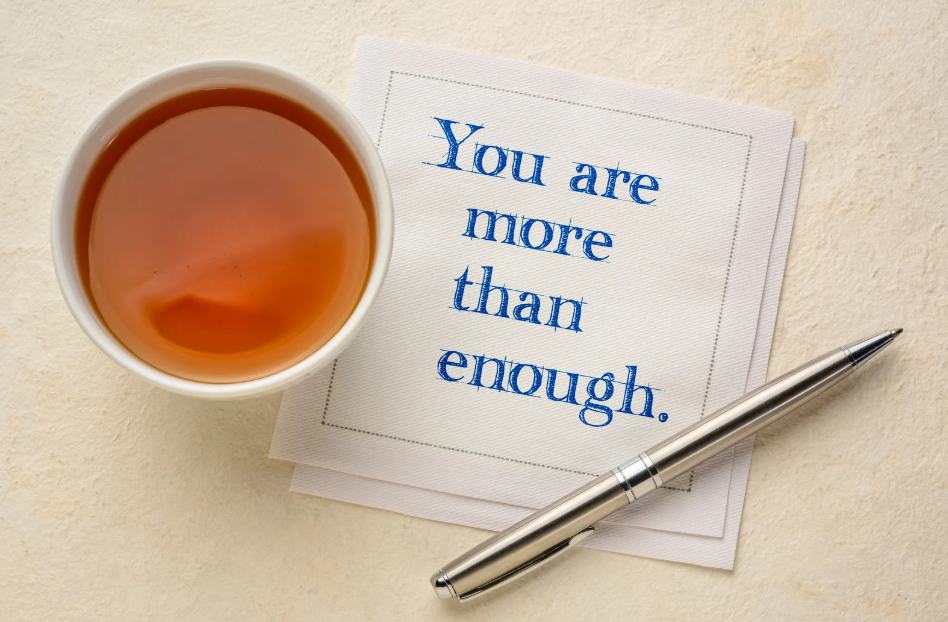
You Don’t Have to Earn Your Worthiness Back After Trauma
If I could eliminate one toxic belief from the collective human psyche, it would be this:
That you have to earn your worthiness.
That you have to prove your value. That you have to justify your existence. That you have to be “enough” to deserve love, rest, pleasure, or belonging.
This isn’t just harmful psychology. It’s harmful physiology.
Your nervous system was never designed to live in a constant state of earning, proving, and performing.
It was designed for cycles: Effort and rest. Connection and solitude. Productivity and recovery. Being and doing.
But somewhere along the way, we got stuck in the “earning” cycle.
Always proving. Always performing. Always demonstrating value.
And we wonder why we’re exhausted. Anxious. Disconnected from ourselves.
Your worthiness isn’t something you achieve. It’s something you remember.
It was your birthright before the world convinced you it was conditional.
The Journey Home: Practical Steps for Self-Excavation After Trauma
If you’re ready to remember who you were before the world got to you, here are some questions to guide your excavation:
- What parts of yourself did you exile to be accepted? Was it your anger? Your needs? Your sensitivity? Your ambition?
- When did you first learn it wasn’t safe to be fully yourself? Was there a specific moment, or was it a slow erosion?
- Whose voice is loudest in your head when you try something new? Whose standards are you measuring yourself against?
- What would you do if you weren’t afraid of judgment? Not just big life decisions, but daily choices: what you wear, say, eat, or create?
- When was the last time you felt fully alive in your body? What were you doing? Who were you with? What made it safe to be present?
These aren’t just journal prompts—they’re excavation tools. Archaeology for your authentic self.
The Hard Truth About Reclaiming Your Authentic Self After Trauma
You don’t need to become someone else. You need to remember who you were—before the pain, the pressure, and the programming.
Before the world taught you to hate your softness. Before love made you question your worth. Before, survival told you to stay small, stay safe, and stay quiet.
You’re not behind. You’re not broken. You’re not late.
You’re just remembering.
So come home. Unpack your voice. Reclaim your fire. And stop trying to become someone you already are.
This is exactly what I help people do—excavate their authentic selves from beneath the layers of adaptation, performance, and survival.
This isn’t about becoming some “better version” of yourself. It’s about coming home to the version that’s been waiting for you all along.
Begin your journey now at https://MindsetRewired.com.
Let’s dig.
FAQ: Excavating Your Authentic Self After Trauma
How do I know which parts of me are authentic and which are adaptations?
Your body knows the difference. Adaptations require effort, vigilance, and energy to maintain. They create tension in your body and often feel like “shoulds.” Your authentic self feels like relief. Like exhaling. Like coming home. Pay attention to when your body relaxes versus when it tightens—that’s your map.
Can I really recover who I was before trauma?
You don’t recover the exact same person—that would ignore the wisdom you’ve gained. Instead, you recover the essence, the core qualities, while integrating what you’ve learned. It’s not about going backward; it’s about reclaiming what was authentic and bringing it forward.
How long does this excavation process take?
There’s no timeline for remembering yourself. For some, certain aspects return in a moment of clarity. For others, it’s a gradual reclamation over months or years. What matters isn’t speed but direction—are you moving toward authenticity or away from it? Each step home counts, regardless of how long the journey.
Will people in my life accept the authentic me if I’ve been performing for years?
This is where courage comes in. Some relationships will deepen when you show up authentically. Others may struggle with the “new” you—because they’ve grown comfortable with your adaptations. The painful truth is that not every relationship survives authenticity. But the ones that do become infinitely more nourishing.
How do I maintain authenticity once I’ve reclaimed it?
Authenticity isn’t a destination you reach once and remain at forever. It’s a daily practice of choosing truth over performance, even when it’s uncomfortable. It requires regular check-ins with your body, boundaries around energy-draining relationships, and community that mirrors your truth rather than your adaptations.